

How To Get Agario Private Server
The appearance of ubiquitous server virtualization is one of a relatively small number of technologies that can exist extremely useful to companies of any size–even a company of a single employee. While total-blown virtual server farms can cost large bucks, the bulwark to entry for smaller projects is most nonexistent.
There are plenty of complimentary virtualization frameworks available that offer a surprising array of features for no cost other than the fourth dimension required to find and install them. They're not at the same level as the expensive large boys, but you lot might observe that they're perfectly suited to a specific project or can exist leveraged to perform testing or proof-of-concept tasks without hitting the budget.
Back-Room Virtualization
The main thrust of the virtualization movement is to virtualize server resource. There are a diversity of reasons for moving in this direction, including the availability of cheap multi-core servers, greater levels of redundancy, ease of management, and faster backups, to name a few.
Some of the higher-end features of server virtualization are only available with commercial solutions, only there are very capable free solutions that can be of pregnant benefit in any organization.
VMWare ESXi

The leading costless offerings are available from a few commercial vendors, but there are too good open up-source tools. VMware offers its ESXi embedded product for free download, and it supports a variety of common virtualization features, such as snapshots and remote storage on a very stable platform, only information technology doesn't offering higher-terminate features like cloning and live migration from host to host without licensing VMware vCenter. You lot must also install information technology on fully-supported hardware.
ESXi is a smashing manner to run several production virtual servers on a single physical server, as long as it'due south understood that if the physical server fails, those virtual servers will be downwardly until it is stock-still. The upside of that is that you tin can boot the virtual servers on a different physical server at any time.
Microsoft Hyper-V
Microsoft's Hyper-V solution isn't technically free, even though it'southward offered as function of Windows Server 2008. In social club to run Hyper-V as intended, you must buy the underlying server Os first. However, by buying a re-create of Windows Server 2008 R2 Enterprise, yous tin legally run up to 4 virtual servers with Hyper-5 on that physical host with a single license.
Linux Options
More advanced users, or those comfortable with Linux may want to investigate the Xen open-source server virtualization projection at xen.org. Xen runs on Linux and the configuration and maintenance is more involved than other free solutions, but Xen offers features more inline with expensive commercial products than almost other packages, such every bit live migrations of running virtual servers from 1 host to another. It also supports Windows, Linux, and FreeBSD virtual servers.
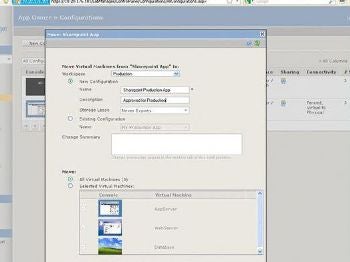
At that place's also a freely-bachelor server hypervisor package bachelor from Citrix that is built from the open-source Xen project. The free Citrix XenServer edition supports snapshots, multi-server management via XenCenter, and live migrations like its open up-source relative, but it doesn't offer more involved features, such every bit memory optimization. For those who aren't versed with Linux servers but want to exam the waters with Xen, Citrix XenServer cuts out much of the learning curve.
And for those that are looking to do Linux-simply virtualization, open up-source tools like OpenVZ are available that tin can run dozens of paravirtualized Linux servers on a single host. Paravirtualization differs from "normal" virtualization in that information technology does not emulate hardware to the virtual server, simply rather runs the virtual server in a walled-off subset of the physical server. In this way, you can build many virtual servers with little performance loss, but those virtual servers must exist running Linux as well.
As with whatever server, information technology'southward okay to test and experiment with desktop-class hardware initially, but for production use, y'all should utilize a server-class system that has redundant hard drives and, ideally, redundant power supplies. While server virtualization has many advantages, without the enhanced reliability features found in commercial offerings, information technology's possible that the failure of a single physical server can effect in an outage that takes downwardly many virtual servers.
Ii Sides of the Coin
While the main focus of corporate virtualization plans focus on the server side of things, there's plenty of activity happening on the desktop virtualization cease too. Desktop virtualization in this sense is represented by software that runs on a desktop or workstation system, and is generally used to run other operating systems equally desktops or workstations.
An example might be using a desktop virtualization awarding to run several copies of Windows XP, all running on Windows 7 installed on a physical desktop machine. Of course, you besides can run Linux, Windows Vista, or whatsoever number of other operating systems the same way. This is not the same as server virtualization, though it's technically possible to run server operating systems in this fashion.
The uses for this applied science vary widely. One popular example is to house several different installations of Windows XP or Windows 7 as virtual systems on a desktop machine, each of which may represent a desktop system in use past a subset of the users in the organization. The virtual systems are loaded with the applications found on the actual user's systems, and configured similarly. Every bit security patches and software upgrades are released, they tin be tested in this "sandbox' environment to make certain that there are no problems encountered with applications or other proper functioning of the desktop.
By using the snapshot features, multiple tests can be conducted quickly and hands, without the need to rebuild the machine to a clean slate every fourth dimension. This tin exist an immense time saver all by itself.
Another potential do good of a desktop virtualization application might exist testing new operating system versions, such as in a planned migration from Windows XP to Windows 7. Using the same snapshot engineering science, it'due south easier to exam application support and installation when you tin can click a unmarried button and reset to a clean installation at a whim.
Another mutual scenario is to provide a place to run and maintain legacy software that cannot run on more modern operating systems and may take been replaced, but is still required for some reporting tasks, or any number of other reasons. Rather than go on that application installed on a physical system that could develop problems, you can install it on a virtual desktop machine that tin be run on any number of systems and easily backed up to tape.
There are commercially-available desktop virtualization applications available, such as VMware Workstation for Windows and Linux, and Parallels for Mac and Linux. Both offer a bevy of features and options, but also come up with licensing fees. On the open-source side, there are projects like VirtualBox that have many of the most useful features available for no toll.

Sun Microsystems originally developed VirtualBox, , and it's freely available for Windows, Linux, and Mac OS 10. It's a relatively pocket-size download at 75MB, installs very easily, and offers an intuitive GUI interface. Within a few minutes, you lot can install it, create a new VM through the wizard, and be installing the 32- or 64-fleck Os of your selection. VirtualBox supports a wide array of operating systems, including Windows three.ane through Windows 7, Linux, FreeBSD, and fifty-fifty IBM Bone/2 Warp. It also supports USB passthrough, serial port passthrough, audio, and shared folders.
Never Too Late to Kickoff
The first stage of any virtualization project is to familiarize yourself with the bachelor concepts and tools. Many of these freely-bachelor options can go a long mode towards that goal with no capital outlay. At that place are few concrete resource required to take the initial steps–in many cases, a spare laptop or desktop might be perfect for the job, or even a recently-retired server. If you lot practise take these steps, note that RAM is very of import to whatever virtualization scenario, so add together as much every bit you tin can to whatsoever hardware you choose.
Whether you're interested in desktop or server virtualization, there'due south no time like the present to dip the proverbial toe in the h2o. With a bevy of characteristic-packed free solutions readily available, you'll find that getting into the virtualization game has never been easier.

How To Get Agario Private Server,
Source: https://www.pcworld.com/article/498483/first_steps_to_virtualization.html
Posted by: alcazarsarlizies.blogspot.com
0 Response to "How To Get Agario Private Server"
Post a Comment